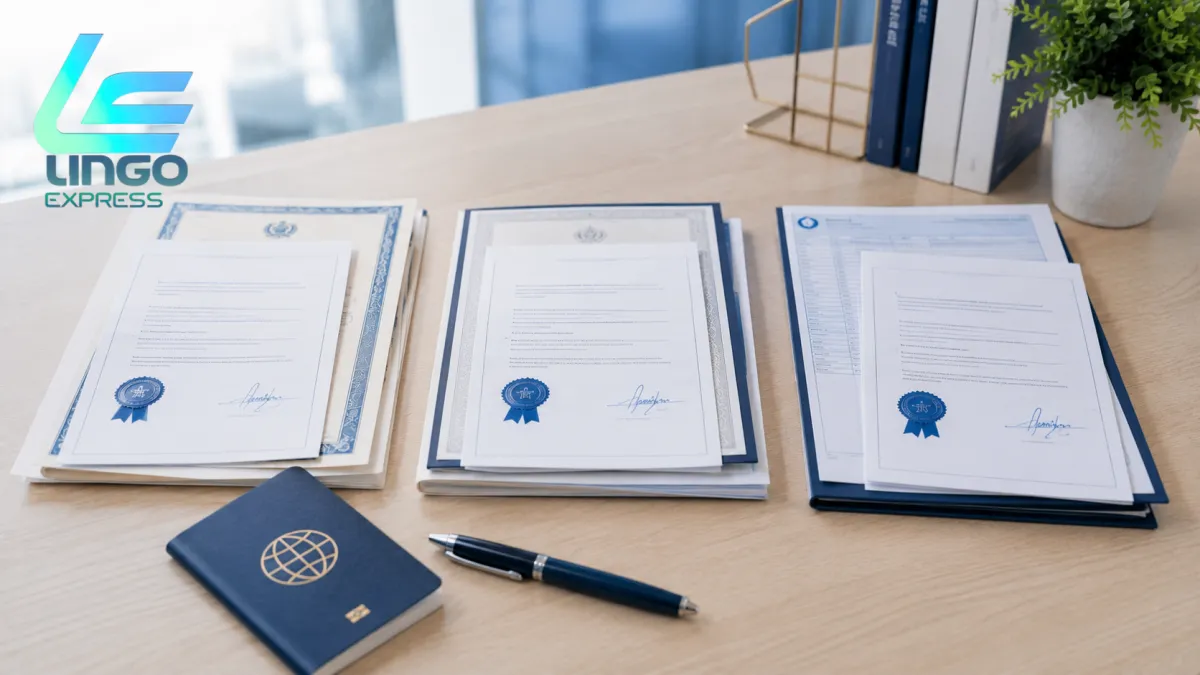
Urgent Notarized Translation in Singapore: How to Avoid Last-Minute Stress
Notarisation adds a layer to a translation — a Singapore Notary Public attests to the translator's signed certification — and because it involves a second professional and a separate appointment, it is the step most likely to derail a rushed timeline. The stress almost never comes from the notarisation itself; it comes from the mistakes made before it, each of which quietly eats the hours you do not have. Below are the five that catch people out most, each with a fix, so a notarised translation lands on time instead of at midnight.
❌ 1. Starting far too late
The single biggest cause of last-minute stress is treating a notarised translation as a same-day errand. It is not one step but a chain — translate, check, certify, then notarise — and the notarisation sits at the end, dependent on a Notary Public's availability rather than yours. Leave it until the eve of a deadline and you are at the mercy of a calendar you do not control.
How to avoid it: Treat the day you learn of the requirement as the day to begin. Send your documents the moment a portal date or an interview is confirmed, so the whole chain has room to run at a normal pace and the notary visit is booked early rather than squeezed in.
❌ 2. Assuming you need notarisation at all
Plenty of last-minute scrambles are spent arranging a notarisation the receiving authority never asked for. A certified translation — a signed statement of accuracy from a qualified translator on company letterhead — is enough for many everyday official uses. Notarisation is an additional tier, commonly required for higher-stakes routes such as permanent residence and citizenship, but whether it applies to your case depends on the scheme and the document type.
How to avoid it: Confirm the tier before you rush anything. Read the requirement printed on your own application page, and if it only says "translated" or "certified," you may not need a notary at all — which removes the most time-consuming step entirely.
❌ 3. Sending poor or incomplete scans
A blurry photo taken at an angle, a page cropped at the edge, or a missing reverse side forces a round-trip for better images — and under deadline, that lost half-day is exactly what tips a job into crisis. The fine print inside a hospital stamp or the small characters of an official seal are the first things to dissolve in a low-resolution image, and those are precisely the parts that must be rendered.
How to avoid it: Scan every page at 300 DPI or higher on a flat surface in good light — full page in frame, nothing cropped, the back included where stamps or signatures appear — before you send anything. Crisp scans on the first pass keep the chain moving.
- A Chinese "Medical Certificate of Birth" carries the neonatal name, both parents' ID numbers and a red hospital stamp — if the name doesn't match the passport, the certified document is reissued and re-notarised, two steps redone.
- A Malaysian "Form A" birth certificate shows the parents' IC numbers and a registrar's stamp — a missed field means the same double redo.
- A multi-page "Resident Household Register" (hukou) with Public Security Bureau seals throughout is the worst case to repeat against the clock, because every page and seal has to be re-rendered before it goes back to the notary.
❌ 4. Getting names wrong, forcing a re-do after notarisation
A name that does not match your passport is bad enough on a certified translation; on a notarised one it is doubly painful, because correcting it means re-certifying and then re-notarising. Romanised names from Chinese or Malay originals are especially prone to this — the same characters can be written several defensible ways, but only the passport spelling is correct. The same applies to parents, spouses and children, whose names and ID numbers must reconcile across the whole set.
How to avoid it: Give your translator a clear scan of your passport bio page — and your family members' where relevant — at the start, and ask that every name be matched to it precisely, so nothing has to be unwound after the notary has already signed.
❌ 5. Treating the notary step as instant
Even with a flawless translation, notarisation is a separate professional act with its own timing — a Notary Public must witness and attest to the certification, then apply the seal. Booking two providers separately, and hoping their schedules align on your deadline, is where many people lose control of the clock. The handoff between translation and notarisation is the seam where rushed jobs fall apart.
How to avoid it: Use a provider that arranges both in one job. LingoExpress coordinates the certified translation and the Notary Public step together, so you are not chasing two calendars and the seam is managed for you.
✅ Your 60-second calm-deadline tick-list
Run through this the moment a notarised translation lands on your plate. One minute now keeps the whole chain unhurried:
- ✅ You've started early — documents sent the day the requirement was confirmed, not the night before.
- ✅ You've checked whether notarisation is actually required, or whether certified alone is accepted for your case.
- ✅ Scans are 300 DPI or higher, full-page, sharp, with the reverse included where seals or signatures sit.
- ✅ Every name matches your passport, and family members' names and ID numbers reconcile across the set.
- ✅ Every stamp, seal and annotation is rendered, so nothing forces a redo after notarising.
- ✅ Certification and the Notary Public step are arranged together, not booked with two separate providers.
- ✅ You've given the real deadline up front, so the timeline is planned honestly from the start.
Clear all seven and a notarised translation stops being a source of dread, even on a short runway. For a tailored read on whether your documents need notarisation and how to fit it to your deadline, send them to LingoExpress and have the scope confirmed before you commit.
📣 Contact LingoExpress for a free quote!
📧 Email: [email protected]
🌐 Website: https://lingoexpress.com.sg