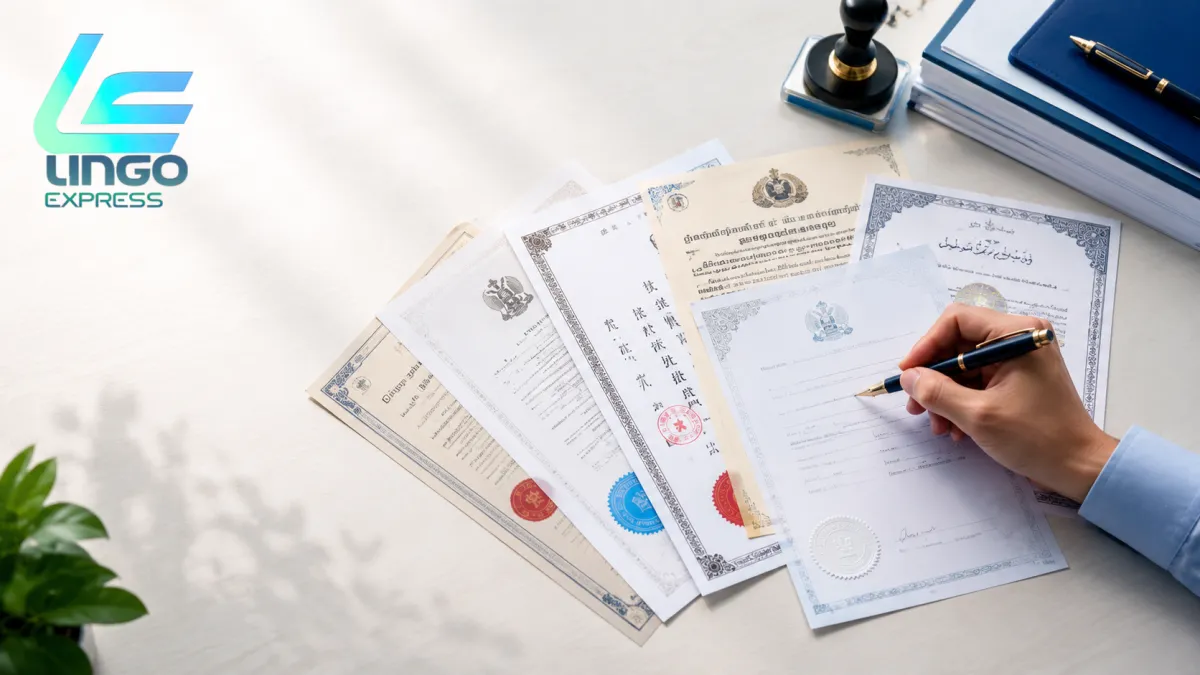
Google Translate vs Professional Translation Services
Free machine translation has changed everyday life — you can stand in a foreign supermarket and read a label in seconds. So it is reasonable to wonder whether you still need to pay a person to translate a birth certificate or a contract. The honest answer is that the two are not really competitors; they are different instruments for different jobs. The mistake is reaching for the convenient one when the stakes call for the accountable one.
This comparison sets out what each option genuinely does well, where the free route quietly fails, and how to tell which side of the line your own document sits on — so you neither overpay for trivial reading nor under-prepare a submission that matters.
🤖 What Google Translate is genuinely good at
There is no need to be snobbish about machine translation — for comprehension, it is remarkable and often free. If you want to understand the rough meaning of an email, follow a foreign article, get the sense of a product description, or exchange casual messages with someone abroad, it does the job instantly and at no cost. For that whole category of low-stakes, no-one-is-checking reading, it is the sensible choice and a professional service would be overkill.
It is also a fine first pass when you simply want to know what a document is before deciding what to do with it. The trouble starts only when its output has to be relied upon by someone other than you.
It is worth being clear-eyed about why it falls short on official work, because the limits are structural rather than a matter of the engine "getting better." A free tool has no way to attach a signed statement of accuracy, no way to take responsibility if a word is wrong, and no awareness of the formatting an authority expects to see. It also tends to translate word by word rather than meaning by meaning, which is fine for a sentence about the weather and dangerous for a clause that defines a legal relationship or a field that records a parent's identity. None of that is a flaw you can prompt your way around — it is simply outside what the tool is built to do.
🖋️ What a professional service does that a machine can't
A professional certified translation is not just "the same text, but paid for." It carries things a free engine structurally cannot provide. A qualified human translator signs a statement of accuracy, putting a named person and a real registered entity behind the work. The translation reproduces the document — every seal, stamp, and signature rendered or noted in place, and the layout mirrored so an officer can lay the two side by side. And the translator weighs context, choosing the right legal or civil term where a machine reaches for a literal word that changes the meaning.
📊 Side by side
Lined up against the things that actually decide an official outcome, the gap is clear — and so is the case for using each where it fits.
| Google Translate | Professional Service | |
|---|---|---|
| Best for | Understanding meaning, casual reading, quick gist. | Official documents an authority will scrutinise. |
| Certification | None — no signed statement of accuracy. | Signed accuracy statement on company letterhead. |
| Seals & layout | Ignored; tables and stamps lost. | Every seal rendered; layout mirrors the original. |
| Accountability | No one stands behind the output. | A named translator and registered entity. |
| Accepted officially | No. | Yes — built for that purpose. |
🧭 Which one does your situation call for?
Ask yourself one thing: will someone else make a decision based on this translation? If you are reading a foreign news article over coffee, the answer is no — use the free tool and move on. If you are submitting a foreign-language certificate to an authority such as the Immigration & Checkpoints Authority (ICA), registering a marriage, enrolling at a university, or filing a document in a legal matter, the answer is yes — and a professional certified translation is what that decision-maker needs to see.
Used in their proper places, the two are not rivals at all — one helps you understand the world, the other helps the world accept your documents. For anything that has to be relied upon, LingoExpress delivers a certified translation that mirrors your original and carries a signed statement an authority can trust — across 45+ languages and documents from more than 30 countries.
📣 Contact LingoExpress for a free quote!
📧 Email: [email protected]
🌐 Website: https://lingoexpress.com.sg