Certified or Notarized Translation for Malaysian Documents: How to Decide
Because so many Malaysian documents are issued in Bahasa Malaysia, families and professionals moving across the Causeway run into the same fork in the road: should the translation be certified, or notarized? The two words get used interchangeably in conversation, but they sit at different levels and cost different amounts of effort. Pick the wrong one and you either waste money on a layer nobody asked for, or you get sent back to add one you skipped. This guide separates the tiers cleanly and gives you a simple way to decide.
📝 What a certified translation is
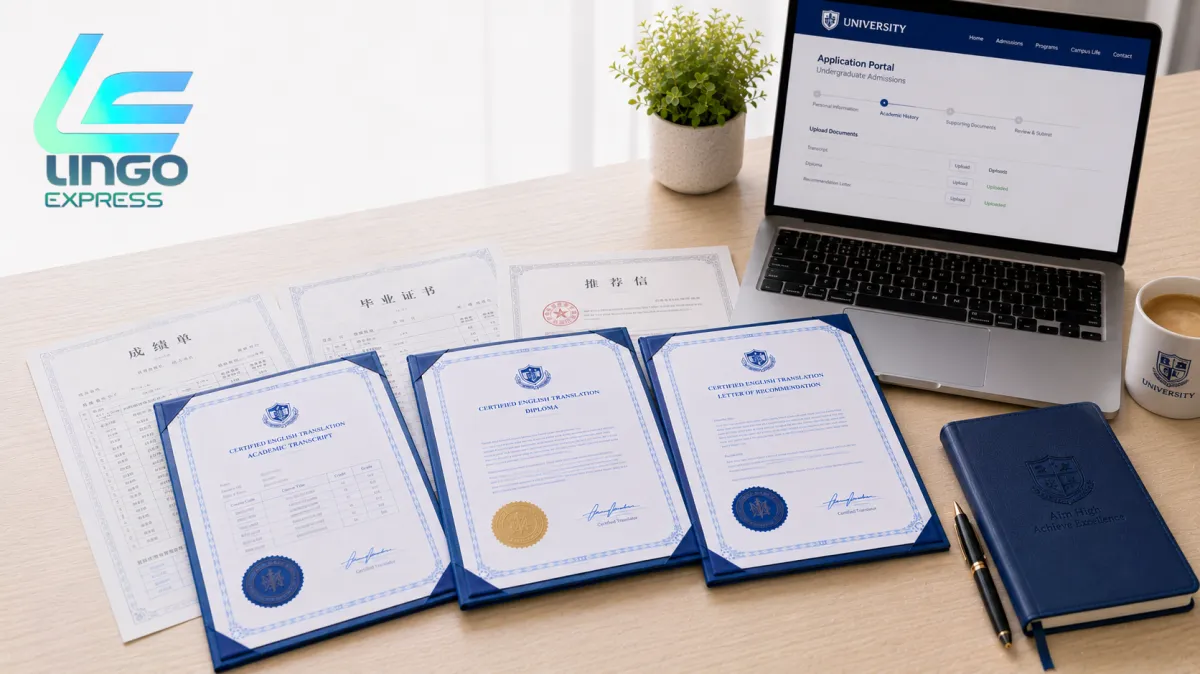
A certified translation is one a qualified translator signs off with a formal statement of accuracy, declaring the English version is a complete and faithful rendering of the Malay original. The certification carries a named translator, a date, and the translating entity behind it — at LingoExpress it is issued on company letterhead under a registered UEN. That accountability is the entire value: the officer reading your file can see precisely who stands behind the work and trace it back if a question ever arises. For a great many everyday uses in Singapore — a work pass, school enrolment, opening an account — this certified tier is the complete answer with nothing further required.
🖋️ What a notarized translation adds
A notarized translation is the certified work plus one more layer: a Singapore Notary Public formally attests to the certification — confirming the translator's identity and witnessing the signed declaration — and applies the notarial seal. The subtle point that trips people up is what the notary vouches for. The notary attests that the certification was properly made and signed; the notary does not re-translate or independently verify every Malay phrase. So the underlying translation must still be accurate in its own right — notarization layers an official witness on top, it does not rescue a weak translation. This is the tier most often requested for higher-stakes civil matters, and LingoExpress coordinates the Notary Public step in the same job so you are not running between two providers.
📊 Certified vs notarized, side by side
Lined up against the questions that actually decide a Malaysian-document case — what each tier is, who stands behind it, and when it is typically asked for — the difference becomes easy to read at a glance.
| Certified Translation | Notarized Translation | |
|---|---|---|
| What it is | A signed accuracy statement from a qualified translator, on company letterhead. | That certified translation, additionally attested and sealed by a Notary Public. |
| Who stands behind it | The translator and the translation agency. | A Singapore Notary Public, on top of the agency's certification. |
| Typically asked for | Work passes, school enrolment, banking, many everyday submissions. | PR and citizenship civil documents; courts — confirm your case. |
| Effort and cost | The base translation and certification. | An added handling step that sits on top of the base. |
🧭 How to decide for your Malaysian document
The decision comes down to three quick questions. Who receives it? A routine pass or an institution usually accepts certified; a PR or citizenship file leans toward notarized. What does the checklist literally say — "translated," or "notarized"? Take the wording at face value. Is another country involved? If a Singapore document is heading overseas, a further step such as an apostille may enter the picture — but that rarely applies to a local submission. For Malaysian civil records specifically, note that the source authority is the National Registration Department (JPN) — for example a divorce recorded as an "Update of Marriage Record" — and the receiving Singapore authority is the one whose tier you must satisfy, not the Malaysian one.
The principle underneath is steady: the right tier, not the highest, is what keeps a Malaysian-document submission moving. Rather than guessing, send your scans together with the name of the application you are filing and have the correct scope confirmed before anything is signed or sealed. After years of handling Form A certificates, SPM results, and marriage and divorce records for families crossing between Johor and Singapore, the LingoExpress team can usually point you to the right tier on a first read — and arrange notarization in the same job when your case genuinely calls for it.
📣 Contact LingoExpress for a free quote!
📧 Email: [email protected]
🌐 Website: https://lingoexpress.com.sg