Can I Translate My Marriage Certificate Myself?
It is a fair question to ask. If your marriage certificate is in Mandarin or Malay and you read English fluently, why pay someone else to do what you could type out in an afternoon? The instinct is reasonable — but the answer turns less on your language ability and more on who the receiving authority is willing to trust. Below, the most common follow-up questions, answered plainly.
🚫 Why won't authorities accept my own translation?
The core issue is independence. A certified translation is meant to be an objective rendering that the officer can rely on — and you, as the person whose application depends on the document, are not a neutral party. Even a flawless self-translation carries an unavoidable conflict of interest, because you benefit directly from how the document reads. Bodies such as the Immigration & Checkpoints Authority (ICA) and the Registry of Marriages (ROM) sidestep that problem entirely by requiring the translation to come from a qualified, arm's-length translator who signs their name to it.
📝 What actually makes a translation "certified"?
Certification is not a stamp you can buy off a shelf or a font you can mimic. It is a formal declaration: a qualified translator states, in writing, that the translation is a complete and faithful rendering of the original, and signs it. The statement names a real, accountable signatory and entity. That is precisely what a home-made document lacks — there is no independent professional standing behind it, so there is nothing for the officer to verify.
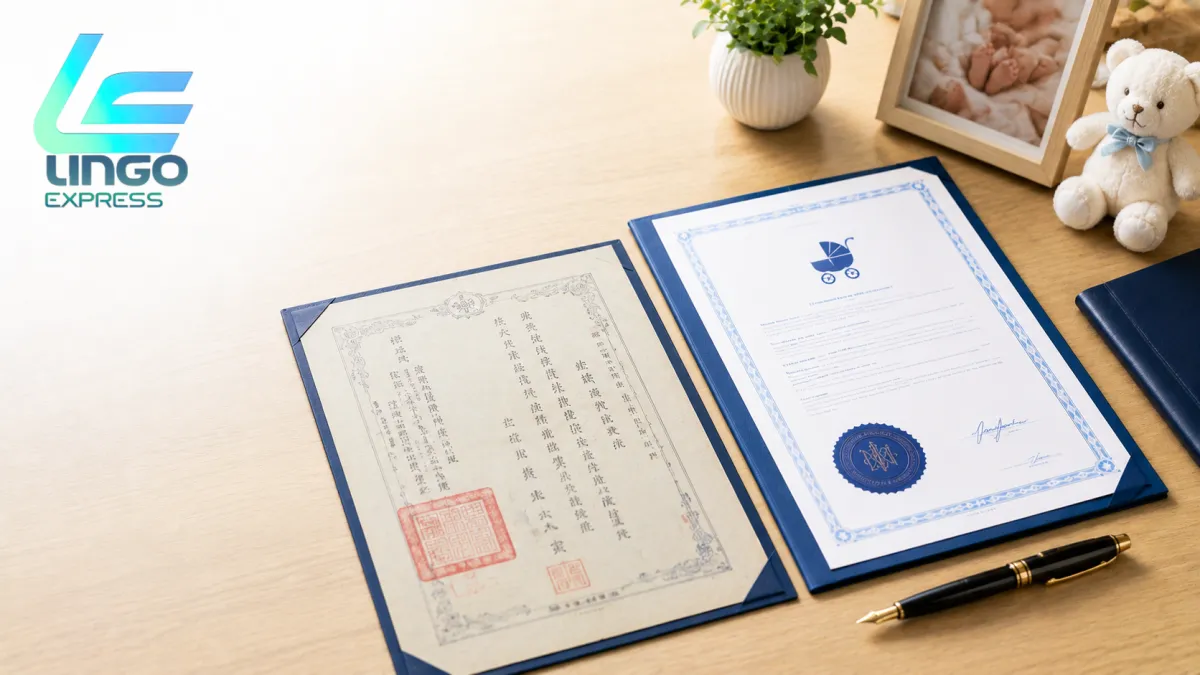
A foreign marriage certificate is denser than it looks. It typically carries both spouses' full names, their national ID or passport numbers, the date and place of the marriage, the registering authority, and an official seal or registrar's signature. A Chinese marriage certificate, for instance, comes with its own registration number and a red official seal that must be rendered or noted in brackets. Drop any one of those fields — or leave the seal as an untranslated mark — and the document reads as incomplete, no matter how good the rest of the wording is.
⚠️ But my spelling and grammar are perfect — isn't that enough?
Language quality is necessary but not sufficient. Two things sink self-translations even when the English is impeccable. First, the independence problem already covered — fluency does not make you a neutral signatory. Second, the conventions: official translation has rules a fluent layperson rarely knows, such as bracketing seals as [Official seal: …], mirroring the original's layout so the two can be read side by side, and matching every name to the spelling on the passport rather than to how you would naturally write it. A clean paragraph of English is not the same as a correctly formatted certified document.
There is also the matter of consistency across a wider file. A marriage certificate rarely travels alone — it sits beside birth certificates, identity records and sometimes a divorce decree, and an officer reads them as a set. A self-translator handling one document in isolation has no reason to align the spelling of a shared surname or the format of a date across the whole bundle, yet that cross-document agreement is exactly what a reviewer checks. An independent provider preparing the full set keeps those details in step from the start.
🖋️ Will I also need it notarised?
Sometimes. A notarised translation is a certified one that a Singapore Notary Public has additionally attested to and sealed. It is commonly requested for permanent residence and citizenship applications, and occasionally for marriage registration — but whether it applies to your exact case is something to confirm against your own application page rather than assume. The relevant point here is that notarisation is built on top of certification, so a self-translation cannot reach that tier at all: there is no qualified translator's certification for a notary to attest to in the first place.
✅ So what should I do instead?
Have the certificate translated by an independent provider who can certify it. The process is straightforward: send a clear, full-colour scan of the original, give the passport spelling of both spouses' names, and confirm which authority will receive the document so the right tier is scoped. A certified translation from LingoExpress comes on company letterhead with a signed statement of accuracy from a qualified translator, formatted to mirror your original — and with notarisation arranged in the same job where your application calls for it. You keep the language confidence you started with; what you add is the independence and the certification an officer can actually accept.
The short version: your fluency is genuinely useful — for checking the draft, not for signing it. Leave the certification to an independent translator, and your marriage certificate clears review on the strength of who stands behind it.
📣 Contact LingoExpress for a free quote!
📧 Email: [email protected]
🌐 Website: https://lingoexpress.com.sg