Can AI Preserve Formatting in Certified Document Translation?
It is a fair question to ask in 2026. Machine translation has improved enormously, and for a quick gist of a foreign email it is genuinely useful. The trouble is that a certified document is not a gist — it is a legal stand-in for the original, and a Singapore officer lays the translation beside the source and expects to follow them line for line. So the real question is not whether AI can translate words, but whether it can preserve the shape of an official document well enough to be relied on. The honest answer needs unpacking.
🧩 What does "preserving formatting" even mean here?
For an everyday letter, formatting is cosmetic. For a certified document it is part of the meaning. The position of a field tells an officer what it is; a stamp in the corner proves the document is genuine; a table's columns connect a subject to a grade. When the layout is right, a reviewer can place the English version against the original and verify it in seconds. When it drifts — a seal floating loose, a transcript's columns scrambled, a two-page register collapsed into one — the document stops being a faithful mirror and starts raising questions.
✔️ Where machine tools genuinely help
It would be dishonest to dismiss the technology. On a clean, typed source with a simple structure, a modern tool can carry body paragraphs across competently and keep a basic table from falling apart. It can give a first-pass draft that a translator then shapes. Used as an assistant under human control, it can speed up the routine parts of a long document. The distinction that matters is assistant versus author: helpful for the easy stretches, not trusted to decide the hard ones or to stand behind the result.
⚠️ Where it breaks on official documents
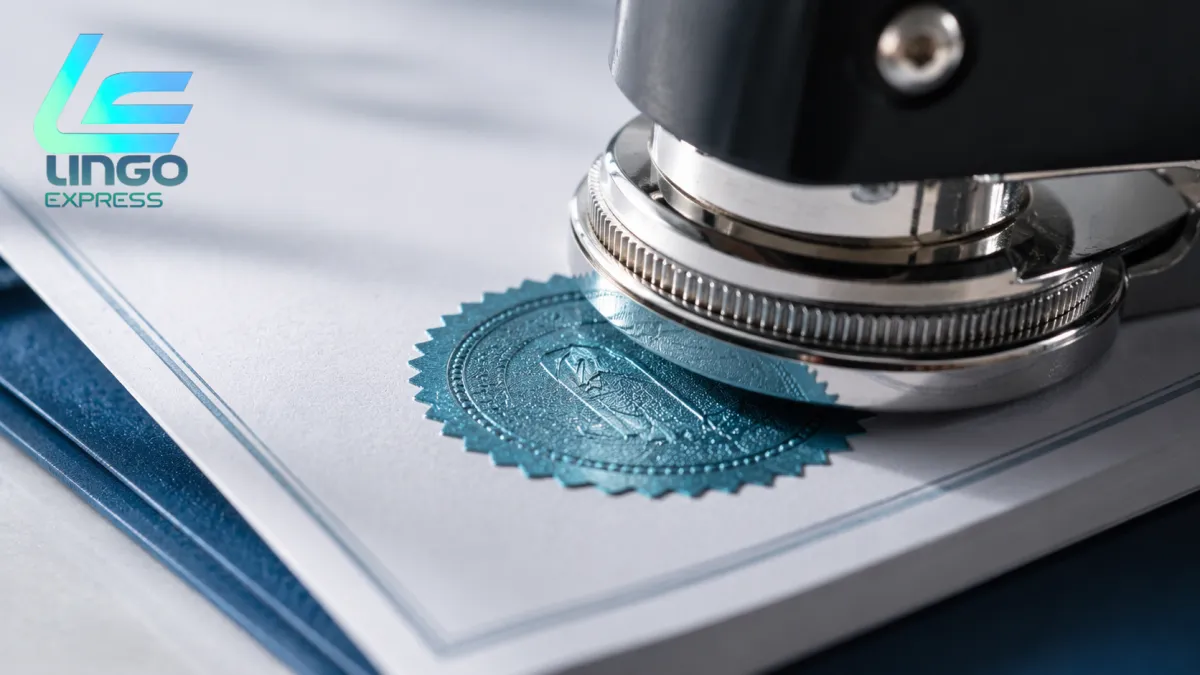
The breakages cluster around the features that make a document official in the first place. A stamp or seal is an image, not text — a machine may ignore it entirely, where a proper translation notes it as something like [Official seal: Public Security Bureau]. Handwritten annotations and signatures are routinely missed. Dense, multi-page records such as a household register get partially read, so the back pages quietly vanish. And the visual mirroring an officer relies on — fields in the same place, a table laid out column for column — is exactly what an automated tool does not reason about, because it is translating language, not reconstructing a document.
Take an academic transcript: subject names down one side, grades and credits across the columns. A machine may translate the subject names accurately yet shuffle the alignment, so a grade no longer sits beside its subject — small on screen, serious to an assessor. Now take a Chinese "Resident Household Register": a cover page with the household type and number, then a "Permanent Resident Registration Card" for each member, with Public Security Bureau seals stamped throughout. A faithful translation reproduces every page and every seal; an automated pass often captures the first sheet and the legible text, and silently drops the rest — which reads as an incomplete document.
📜 Can AI output be certified on its own?
No — and this is the part that no amount of formatting fidelity changes. A certified translation rests on a human declaration: a qualified translator signs a statement confirming the English is a complete and accurate rendering of the original, names themselves, and dates it. The substance of that statement reads: "We, LingoExpress, a professional translation service provider, hereby certify that the attached document(s) have been translated by our team of qualified and professional translators…" A piece of software cannot make that attestation, because there is no accountable person behind it. The signature is the whole point — it is what an authority is actually relying on.
🤝 How LingoExpress handles formatting
The working principle is simple: technology assists, a qualified human decides and signs. LingoExpress rebuilds each document so the English mirrors the source — tables laid out column for column, every stamp and seal rendered or noted, every page of a multi-page register accounted for, and names matched to your passport. Then a qualified translator certifies the result on company letterhead, with notarisation arranged where your case commonly calls for it (confirm for your route). You receive a document that both reads correctly and carries a signature an authority can rely on — something raw machine output, however neat, cannot offer.
If you are weighing whether a machine version will hold up, the safest move is to send the document to LingoExpress with the name of the application it is for, and have the right approach confirmed before anything goes to an officer.
📣 Contact LingoExpress for a free quote!
📧 Email: [email protected]
🌐 Website: https://lingoexpress.com.sg